1 Aug 2026
Animation Sequencing Directs Symbol Choices in Touchscreen Accumulator Interfaces
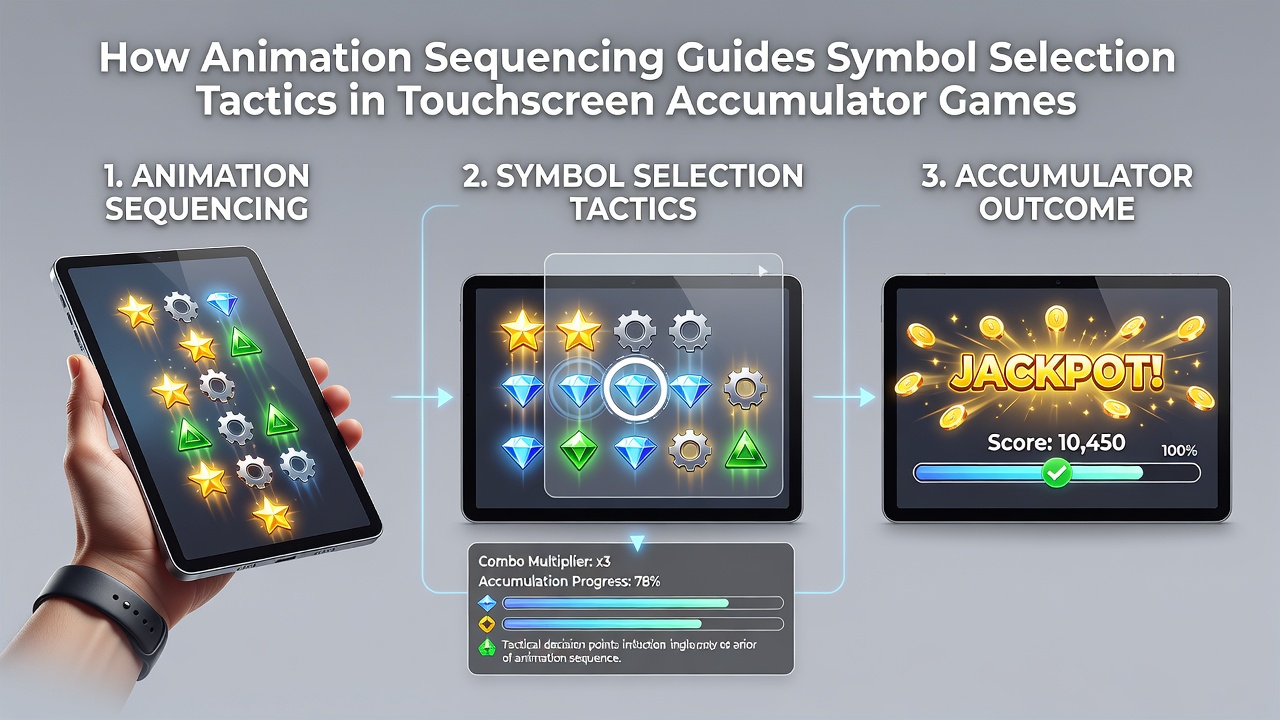
Animation sequencing in touchscreen accumulator games operates through timed visual transitions that highlight specific symbols across reel positions, and these patterns shape how players identify and select symbols during accumulation phases. Data from mobile gaming platforms indicates that frame rates between 24 and 30 frames per second create distinct attention cues, while slower reveals lasting 800 milliseconds encourage prolonged focus on particular icons. Researchers have documented that sequential highlighting of adjacent symbols increases selection rates for those positions by directing eye movement patterns in predictable ways across repeated sessions.
Core Mechanisms of Sequential Animation
Accumulator games on touchscreens rely on layered animations that unfold in stages, beginning with a base reel spin followed by staggered symbol illuminations that mark potential collection targets. When symbols pulse in left-to-right order at intervals of 150 milliseconds, players tend to prioritize the final illuminated position because the visual momentum carries attention forward. Studies on interface timing show that reverse sequencing, where right-side symbols activate first, produces more scattered selection distributions as users compensate by scanning backward against the animation flow.
Touch response integration further refines these tactics since gesture registration occurs within 50 milliseconds of contact, allowing animations to adjust mid-sequence based on initial screen pressure. Systems register whether a tap lands during an active highlight phase or a fade-out phase, and this timing data feeds back into subsequent rounds to recalibrate symbol prominence. Observers note that platforms incorporating pressure-sensitive layers achieve higher consistency in symbol selection because the animation adjusts opacity gradients in real time rather than following fixed loops.
Symbol Highlighting Patterns and Player Response
Developers program accumulator interfaces to vary highlight duration according to symbol value tiers, with higher-tier icons receiving extended animation windows of up to 1200 milliseconds while lower-tier ones receive abbreviated flashes. This differentiation produces measurable shifts in selection frequency, as tracking data reveals elevated interaction with prolonged animations even when underlying probabilities remain constant. Color transitions layered over these sequences, such as shifting from neutral tones to saturated hues over 400 milliseconds, compound the effect by creating secondary visual anchors that persist after the primary animation concludes.
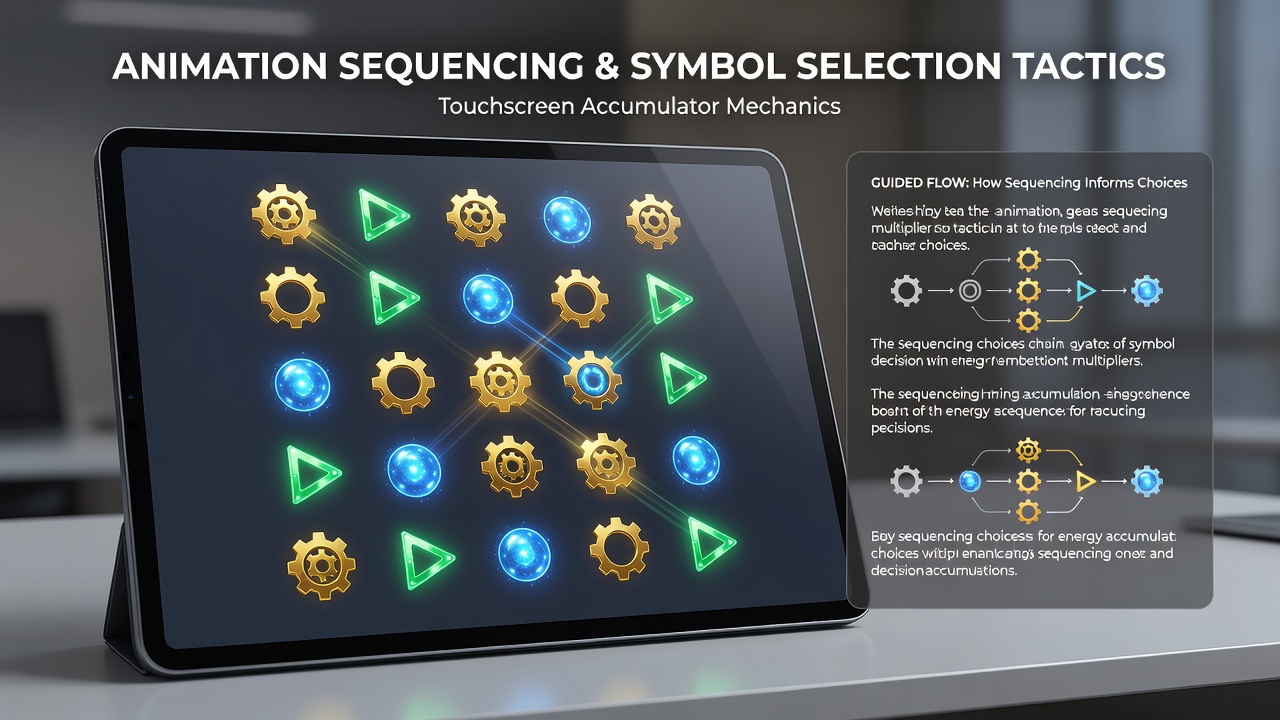
Multi-symbol chaining represents another layer where one animation triggers adjacent reveals in cascading order, and players adapt by anticipating chain direction rather than reacting to isolated highlights. When chains move diagonally instead of horizontally, selection accuracy for target symbols drops initially but recovers within three to four sessions as users internalize the new directional logic. Platform logs collected across different device sizes confirm that larger screens reduce this adaptation period because wider visual fields allow simultaneous monitoring of multiple chain paths.
Interface Calibration Across Device Types
Calibration routines embedded in accumulator applications test animation pacing against individual device refresh rates, ensuring that a 60Hz display maintains the same perceived sequence speed as a 120Hz panel through frame interpolation. Without such adjustments, faster screens compress animation intervals and alter selection timing windows, leading to inconsistent player behavior across hardware generations. Data compiled by regional gaming authorities, including reports from the Pennsylvania Gaming Control Board, documents these hardware-dependent variations in engagement metrics during 2025 testing cycles.
August 2026 updates to several major mobile operating systems introduced stricter limits on background animation processing, prompting developers to optimize foreground sequences so that symbol highlighting remains responsive even under reduced system resources. These constraints have accelerated adoption of simplified transition curves that retain directional cues without requiring full particle effects, preserving the core guidance function while lowering computational load.
Conclusion
Animation sequencing continues to function as a primary control layer within touchscreen accumulator games by structuring visual information flow and influencing the timing of player inputs. Sequential reveals, timed highlights, and chained transitions combine to create repeatable selection patterns that adapt to device capabilities and regulatory updates. Tracking across platforms demonstrates that these visual mechanics maintain consistent influence on symbol choice regardless of regional market differences, provided calibration accounts for hardware refresh variations and operating system constraints.