11 Jun 2026
Regional Policy Adjustments Reshaping Layered Reward Mechanics Across Portable Accumulator Platforms
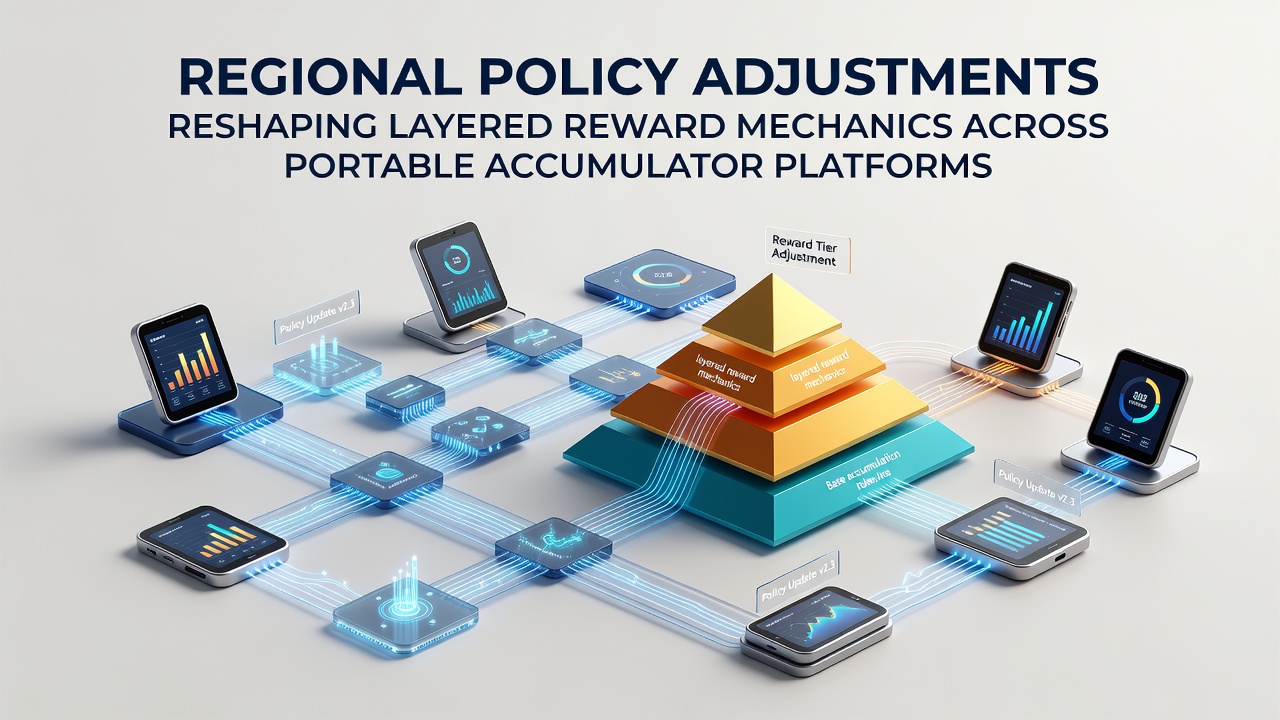
Regional policy shifts continue to influence how layered reward systems operate within mobile accumulator platforms, where users build multi-leg bets and unlock progressive incentives through tiered mechanics. These adjustments stem from legislative updates in multiple jurisdictions that target bonus structures, accumulator multipliers, and reward layering to align with consumer protection standards and market oversight requirements.
European Regulatory Frameworks Drive Structural Changes
Policy revisions across European markets have prompted operators to recalibrate reward layering in accumulator applications, particularly those involving progressive bonus tiers tied to bet complexity. Data from the European Gaming and Betting Association indicates that several member states implemented new compliance protocols in early 2025, which require clearer disclosure of how rewards accumulate across multiple bet legs. Operators responded by adjusting algorithms that determine bonus eligibility, shifting from automatic tier escalations to conditional models that factor in regional tax obligations and user verification thresholds.
These modifications affect how portable platforms calculate layered incentives, such as multiplier bonuses applied sequentially to accumulator outcomes. Platforms must now segment reward pools based on jurisdiction-specific rules, leading to differentiated experiences for users depending on their location. One study from a research team at the University of Malta documented a 22 percent reduction in automatic reward stacking features among compliant apps following these updates, as developers integrated geo-fencing tools to enforce localized mechanics.
North American State-Level Adjustments Influence Accumulator Designs
In the United States, state regulatory bodies have introduced measures that reshape reward layering within mobile accumulator systems, especially where daily fantasy and prediction markets intersect with betting applications. Legislation passed in several states during 2025 established caps on bonus accumulation rates and mandated separate tracking for each layer of an incentive structure. This approach prevents cross-jurisdictional reward transfers and requires platforms to maintain distinct accumulator pools that reflect local taxation frameworks.
Canadian provinces have followed a parallel path, with updates from the Alcohol and Gaming Commission of Ontario emphasizing transparency in how layered rewards scale with accumulator size. Platforms operating in these markets adjusted their systems to display real-time breakdowns of reward tiers, incorporating variables such as bet frequency and regional participation limits. Figures from a 2025 industry report show that these changes coincided with a measurable shift toward modular reward designs, where individual layers activate only after users meet jurisdiction-approved criteria.
Asia-Pacific Developments Introduce New Compliance Layers

Australian authorities, through the Australian Communications and Media Authority, have enforced guidelines that directly impact how accumulator platforms structure progressive rewards across mobile interfaces. Updates effective in mid-2025 require operators to separate bonus layers based on user residency, resulting in customized reward pathways that prevent uniform global mechanics. Developers integrated these constraints by redesigning accumulator interfaces to reflect state and territory variations in incentive eligibility, which has led to more segmented user journeys within single applications.
Similar patterns emerged in parts of Southeast Asia, where national gaming commissions introduced rules limiting the depth of layered rewards tied to accumulator bets. Platforms responded by deploying dynamic adjustment engines that modify reward visibility and activation sequences according to real-time regulatory feeds. Observers note that these adaptations maintain operational continuity while ensuring alignment with evolving oversight frameworks across borders.
Technical Adaptations and Platform Responses
Portable accumulator platforms have incorporated API-driven compliance modules to handle regional policy variations without disrupting core functionality. These modules evaluate user location at login, then apply corresponding reward layering rules that govern bonus multipliers, eligibility thresholds, and accumulation limits. Data compiled by the International Association of Gaming Regulators reveals that such integrations reduced instances of non-compliant reward distribution by approximately 18 percent across monitored markets during the first half of 2026.
Developers have also refined backend systems to support conditional reward paths, where each layer of an accumulator incentive activates only after satisfying location-specific conditions. This technical shift supports smoother transitions between jurisdictions and minimizes the risk of reward conflicts arising from overlapping regulatory requirements. Platforms that implemented these changes early reported sustained user engagement levels despite the added complexity in reward mechanics.
Emerging Trends as of June 2026
By June 2026, several jurisdictions had scheduled additional policy reviews that could further refine reward layering standards for mobile accumulator platforms. These upcoming evaluations focus on standardizing data reporting for layered incentives and exploring unified verification protocols that operate across regional boundaries. Industry participants have prepared contingency frameworks that allow rapid reconfiguration of reward structures in response to new directives.
Research from academic institutions tracking these developments indicates that platforms prioritizing modular reward architectures demonstrate greater resilience when adapting to policy adjustments. Such designs enable targeted updates to individual layers without requiring comprehensive system overhauls, which supports efficient compliance across diverse regulatory environments.
Conclusion
Regional policy adjustments continue to drive measurable changes in how layered reward mechanics function within portable accumulator platforms. Through coordinated technical responses and segmented reward designs, operators maintain operational integrity while meeting jurisdiction-specific requirements. Ongoing regulatory developments through 2026 suggest that these platforms will sustain iterative refinements to their incentive structures, ensuring alignment with evolving oversight standards across global markets.